5 Key Post-Pandemic Trends in Commercial Real Estate
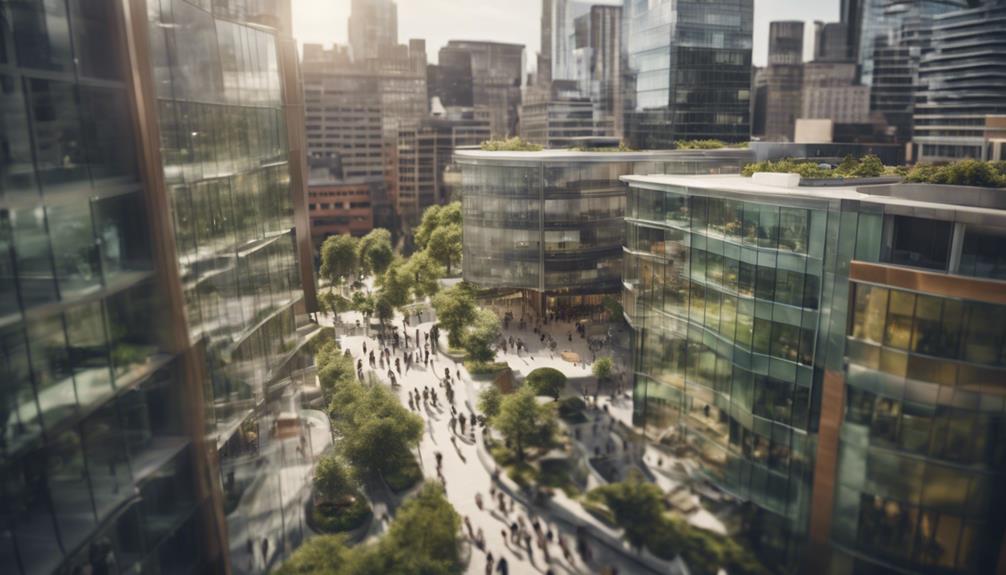
In the wake of the pandemic, you're seeing businesses migrate to suburban office spaces, bringing them closer to your home to cut down on commutes and improve productivity. There's an uptick in massive, tech-forward e-commerce warehouses as online shopping remains strong. You'll also notice a growing flexibility for remote work, lessening your need for traditional office space. Retail property demands are evolving, too, favoring mixed-use spaces and centers that are accessible and engaging. Additionally, there's a notable push in investments toward health and safety, ensuring environments that are up to new standards. These changes shape a dynamic scene you can further explore to stay ahead in your field.
Shift Towards Suburban Office Spaces
As businesses reevaluate their spatial needs post-pandemic, there's a noticeable migration toward suburban office spaces. You'll find this shift isn't just about cost savings; it's also about adapting to a new way of working. With more employees demanding flexibility and a better work-life balance, suburban offices offer an enticing middle ground. They're typically closer to where employees live, reducing commute times and, by extension, enhancing overall job satisfaction.
You might wonder why this trend is gaining traction now. Well, the pandemic has fundamentally changed perceptions of effective work environments. Companies are discovering that decentralized offices can lead to increased productivity and lower overheads. These spaces often come with added perks such as more green areas, which contribute to a healthier, more appealing workplace.
Moreover, you're seeing a rise in hybrid work models, where people split their time between home and an office. Suburban office spaces are ideal for such setups. They provide the necessary professional environment without the hassle of navigating city center congestion.
This shift promises not only to reshape where work happens but also how cities and suburbs grow, influencing everything from local economies to public transportation planning.
Rise of E-commerce Warehousing
The surge in online shopping has dramatically increased the demand for e-commerce warehousing. As you navigate the evolving landscape of commercial real estate, it's crucial to understand how this shift affects your investments. Warehouses dedicated to e-commerce aren't just larger; they're also more complex, equipped with advanced technology for managing inventory and fulfilling orders swiftly.
These facilities are popping up closer to urban centers to ensure quick delivery times, a key component of customer satisfaction. You'll find that the demand for strategically located spaces is pushing up rental rates and reducing vacancies in these areas. This trend presents a lucrative opportunity—properties that can support the logistical requirements of e-commerce, such as proximity to major transport routes and high-tech infrastructure, are commanding premium prices.
Moreover, the shift isn't temporary. The convenience of online shopping means that consumer habits are likely to maintain a high demand for e-commerce, making this a wise area for long-term investment. You should consider diversifying into this niche to capitalize on its growth potential.
Increase in Remote Work Flexibility
Many companies have embraced remote work, significantly altering the landscape of commercial real estate. You've likely noticed fewer bustling business districts and more available office spaces. This shift isn't just a temporary adjustment; it's part of a growing trend where businesses recognize the value in offering flexibility to their employees.
You might be wondering how this impacts you. If you're a business owner, the reduction in demand for traditional office spaces can lead to lower rental costs and more negotiable lease terms. It's an opportunity to rethink your space needs and possibly downsize to a more compact, efficient workspace that better fits your current operations.
For employees, this trend means you could be saying goodbye to the daily commute and hello to a more personalized work environment at home. This flexibility can lead to improved work-life balance, less time on the road, and reduced transportation costs.
Moreover, as remote work becomes more normalized, you might've the chance to work for companies not just outside your immediate geographic area, but anywhere across the globe. This opens up a plethora of opportunities that weren't as accessible before, making it an exciting time for career growth and personal development.
Changes in Retail Property Demand
Shifts in consumer behavior have transformed retail property demand significantly. You've probably noticed fewer traditional malls and more mixed-use spaces, where shopping, dining, and entertainment converge. This isn't just a trend; it's the new norm. Retailers are adapting to your preferences for experiences over mere transactions.
You're likely to see more open-air centers that combine local shops with green spaces, appealing to your desire for safer, more engaging shopping environments.
You've also witnessed a surge in demand for locations accessible by public transit or within walking distance of residential areas. This shift means that as a retailer, you'd be wise to consider accessibility and convenience when choosing a new location. It's not just about being where the traffic is; it's about being where your customers can easily reach you.
Moreover, the rise of e-commerce has reshaped your expectations. Retail spaces now double as fulfillment centers. If you're in retail, think about integrating technology that allows for seamless online and in-store shopping experiences. This hybrid model isn't just convenient for customers; it maximizes your sales per square foot, ensuring that every inch of your retail space works harder for you.
Growth of Health and Safety Investments
Health and safety investments in commercial real estate have become your new priority as a property owner or developer. The pandemic has reshaped your perspective, emphasizing the importance of creating environments that safeguard the health of occupants. You're now investing more in advanced air filtration systems, touchless technology, and materials that are easier to clean and maintain. Such upgrades not only meet the current health guidelines but also reassure tenants and visitors about their safety, potentially boosting your property's appeal.
You've also noticed a shift in tenant expectations. They're increasingly seeking spaces that prioritize well-being, with features like improved indoor air quality and contactless entry points. Responding to these demands, you've started to integrate smart building technologies that enable better monitoring and management of building health metrics.
Moreover, you're adopting more rigorous cleaning protocols and have adjusted building layouts to enable social distancing. These changes aren't just temporary fixes; they're part of a long-term strategy to future-proof your properties against any similar health crises. Investing in these health and safety features now can set your properties apart, attracting higher-quality tenants and potentially commanding premium rents.
Conclusion
You've seen how the commercial real estate landscape is shifting post-pandemic. As you explore suburban office spaces, remember the surge in e-commerce warehousing is reshaping supply chains. You're adapting to increased remote work flexibility, which is altering office demands. Retail property needs are evolving, so stay agile. Don't overlook the importance of health and safety investments—they're more crucial than ever. These trends aren't just passing changes; they're your new playbook for navigating the future of real estate.
Related articles: What’s Shaping Post-Pandemic Commercial Real Estate? · 10 Key Post-Pandemic Trends in Commercial Real Estate · Why Are Post-Pandemic Commercial Real Estate Trends Shifting?