5 Best Secrets: Interest Rates Affecting Commercial Real Estate

Interest rates significantly influence your commercial real estate ventures by affecting cap rates, property values, and the pace of construction and development. When rates rise, you'll find borrowing pricier, potentially deterring investments and slowing new projects. Conversely, lower rates can boost property values and quicken development. They also impact lease rates and tenant occupancy, dictating how much you can charge tenants and how full your properties stay. Keeping an eye on these trends helps forecast future market conditions and adapt investment strategies. Unveiling these insights further can guide you to make smarter decisions in your commercial real estate investments.
Understanding Cap Rate Fluctuations
Cap rate fluctuations directly impact your investment decisions in the commercial real estate market. Essentially, the capitalization rate is what you'll use to estimate the potential return on an investment property. This rate is influenced by the net income the property is expected to generate and is inversely related to its market value.
Understanding these shifts helps you gauge when to buy or sell. A higher cap rate implies a better return, typically seen in less competitive, higher-risk areas. Conversely, a lower cap rate might point to a safer investment, often in highly sought-after locations.
You need to keep an eye on these rates because they reflect the broader economic landscape and investor sentiment. For instance, if economic forecasts are gloomy, you might notice cap rates climbing as prices dip and risks are perceived to be higher.
On the flip side, a booming market could push cap rates down, making properties pricier but potentially more stable in terms of income.
It's crucial to not just follow the current cap rate but to analyze trends over time. This approach gives you a clearer picture of where the market's headed, helping you make smarter, more informed investment choices.
Financing Costs and Property Values
As you explore the realm of commercial real estate, it's crucial to understand how financing costs influence property values. Higher interest rates mean higher borrowing costs, which can deter investment and reduce property values. Conversely, when rates are low, you'll find more favorable borrowing conditions, encouraging investments and potentially driving up property values.
Consider the direct relationship between interest rates and capitalization rates, often referred to as cap rates. An increase in interest rates generally leads to a rise in cap rates, which decreases the property's value. This is because the return on investment looks less appealing compared to the risk-free rate offered by government bonds.
You must also weigh the effects of refinancing. In a low-interest environment, refinancing existing loans can provide substantial savings and increase cash flow, thereby enhancing a property's value. However, if rates rise, refinancing mightn't be feasible, tying you to higher interest costs and decreasing your property's financial appeal.
Lastly, think about how these changes in financing costs reflect on your overall strategy. Are you positioned to act quickly when rates shift? Understanding these dynamics helps you capitalize on market conditions, manage risks better, and plan your investment journey more effectively.
Impact on Construction and Development
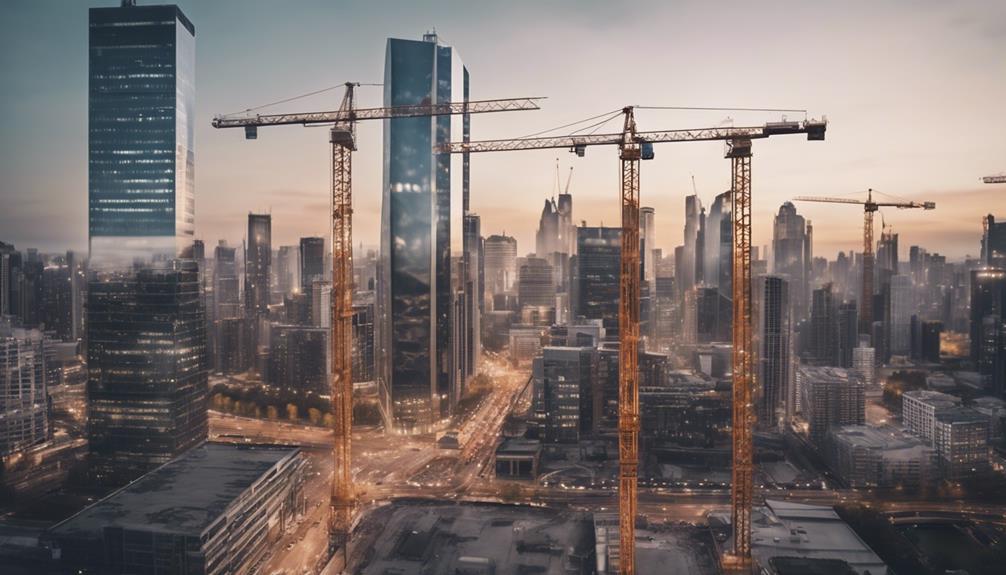
Interest rates' climb not only alters the landscape of financing but also profoundly impacts construction and development sectors. You've likely noticed that when rates go up, the cost of borrowing does too. This isn't just about bigger monthly payments; it's about the feasibility of entire projects. Higher rates mean developers need to dig deeper into their pockets or find more capital, slowing down new constructions.
You're also facing longer timelines. When money costs more, projects often stretch out as developers and investors take longer to close funding rounds. This can delay everything from groundbreaking to the final touches, affecting the whole timeline of entering the market.
Moreover, you've got to consider the types of projects that get greenlit. In a high-interest environment, high-risk projects like large mixed-use developments might not look as attractive. Developers tend to shift towards less risky endeavors, potentially altering the landscape of what's being built. This shift can affect not only the variety of available real estate but also future supply and market dynamics.
Lease Rates and Tenant Occupancy
Higher interest rates not only slow the pace of construction and development, but they also influence lease rates and tenant occupancy. As a commercial real estate investor, you'll find that as borrowing costs rise, property owners often increase lease rates to maintain their profit margins. This uptick in lease rates can deter potential tenants, especially small businesses or startups sensitive to higher operational costs.
You might notice a shift in tenant demographics. Larger, more financially stable companies could become the predominant renters as they're better equipped to absorb these increased costs. On the flip side, you'll see higher vacancy rates among properties that cater to smaller, less financially robust businesses.
It's crucial you monitor these trends closely. An increase in vacancies not only affects your immediate rental income but can also impact the long-term value of your property. To mitigate this, consider flexible lease terms or incentives to attract and retain tenants.
Remember, keeping your properties occupied is vital, even if it means adjusting your expected returns slightly.
This dynamic requires a careful balance. You need to set lease rates that cover your increased costs without pushing away potential renters. It's a delicate negotiation, but with the right approach, you can maintain a profitable and vibrant property portfolio.
Forecasting CRE Investment Trends
Shifting dynamics in the commercial real estate (CRE) market demand that you, as an investor, stay ahead with precise, strategic forecasting. With interest rates fluctuating, you've got to analyze how these changes impact your portfolio's value and the appeal of your properties. Remember, higher rates generally dampen buyer enthusiasm due to increased borrowing costs, which can slow down the market.
To navigate these waters, you'll need to keep a keen eye on economic indicators and market trends. Check out employment rates, GDP growth, and consumer spending. These factors are good predictors of commercial real estate demand. Also, stay updated with government policies affecting real estate, like zoning laws and tax incentives.
Now, consider technology's role. It's reshaping tenant expectations and property functionalities. Are your properties equipped with the latest tech? If not, it's time to think about upgrades to stay competitive.
Lastly, don't ignore demographic shifts. Millennials and Gen Z are entering the market with new workplace preferences. Flexible spaces and eco-friendly buildings are in. Can your properties meet these new demands?
Conclusion
As you navigate the complexities of commercial real estate, remember that interest rates shape everything from cap rates to property values. They influence your financing costs, impact development projects, and even sway tenant occupancy through lease rates. Keeping an eye on these trends will help you make informed investment decisions. Stay ahead by forecasting how shifts in interest rates might play out and adjust your strategies accordingly to maximize your returns in this dynamic market.
Related articles: Adapting to Post-Pandemic Commercial Real Estate Trends · 5 Key Post-Pandemic Trends in Commercial Real Estate · What’s Shaping Post-Pandemic Commercial Real Estate?