Office Spaces in Pajamas: Tomorrow’s Market Oddities

You're stepping into a future where your office space could as well be your living room, decked in pajamas! With the surge in remote work, you're seeing a shift in commercial real estate towards environments that blend comfort with productivity. The rise of hybrid work models means less traditional office space and more adaptive, tech-equipped zones for those critical face-to-face interactions when they're needed. You're looking at spaces designed to support digital collaboration seamlessly, making your next work meeting just as effective from your couch as from a boardroom. Curious how this could change your workday landscape? There's more to uncover just around the corner.
The Rise of Remote Work
Over the last decade, remote work has surged in popularity, transforming from a rare perk to a standard mode of operation for millions of workers worldwide. You've likely noticed the shift—maybe you're even reading this from your home office. This change isn't just about comfort and convenience; it's reshaping how you approach your work-life balance.
You're no longer commuting two hours a day; instead, you're turning those saved hours into time with family or for pursuing personal projects. It's changed your wardrobe too—business casual has taken on a new, softer edge with more people embracing "video-call-appropriate" attire from the waist up.
The impact goes beyond individual lifestyle changes. Companies are rethinking their need for large, expensive office spaces, leading to significant cost savings. They're investing those resources back into better technology and tools that support remote work, ensuring you can collaborate effectively, no matter where you're located.
As you adapt, you're also developing skills in self-management and digital communication, becoming more self-reliant and resourceful. Remote work isn't just a phase; it's a significant shift in the global work culture, fundamentally altering how you connect, work, and balance your life.
Hybrid Models Transforming Spaces
As remote work becomes a staple, many companies are embracing hybrid models, a blend of in-office and remote work that's reshaping office spaces. You're likely seeing fewer traditional desks lined in rows and more collaborative areas. These spaces are designed to foster short-term projects and creative brainstorming when you and your colleagues are in the office.
Flexible workstations have taken center stage. Instead of assigned seating, you might find "hot desks" that you reserve on the days you're on-site. These changes mean offices are using space more efficiently, cutting down on vast, often empty cubicle farms that were once the norm.
Moreover, you're witnessing a shift in how these spaces feel. With more workers spending significant time at home, the days of stark, utilitarian office designs are fading. Now, it's about creating a welcoming environment that you actually want to commute to.
Think lounge areas, plants, and art that make the space more inviting and less formal.
This evolution isn't just about aesthetics or logistics; it's a reflection of changing attitudes towards work. You're part of a movement that values flexibility and well-being, ensuring that when you do come to the office, it's both productive and pleasant.
Technology's Role in Office Evolution
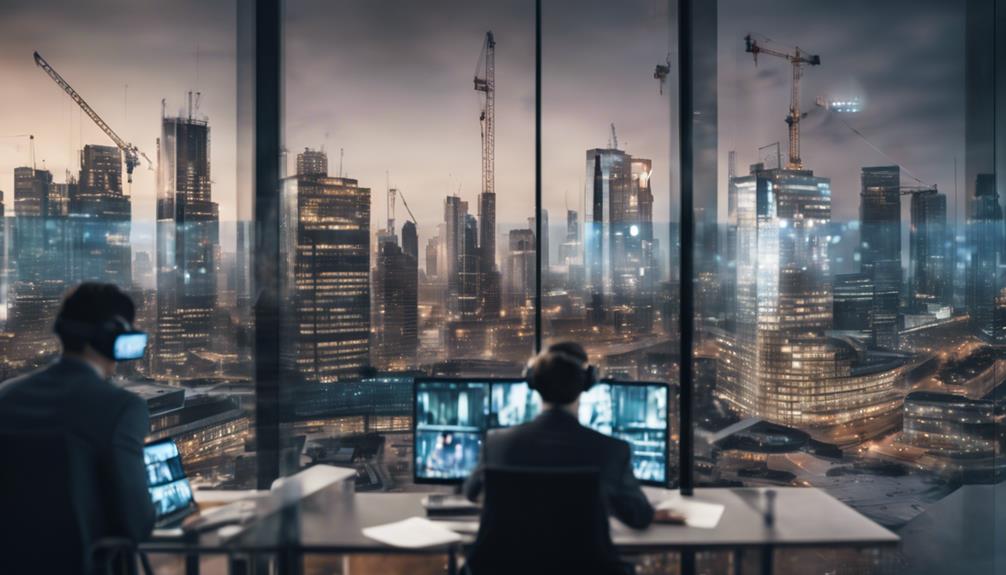
Technology is fundamentally changing how we interact with our office environments. You're now witnessing an era where your workspace is as flexible as your schedule. Virtual reality (VR) meetings transport you to simulated boardrooms, while artificial intelligence (AI) assistants manage your calendar, prioritize emails, and even remind you to take a break. It's not just about convenience; it's about efficiency.
Your office isn't just a physical space anymore; it's wherever you can connect to the internet. Cloud computing lets you access files and collaborate in real-time, no matter where you are. You're no longer tethered to a desk; you're mobile, adaptable.
Collaboration tools like Slack and Asana streamline project management and communication, making it easier to work across different time zones without missing a beat.
Moreover, these technologies are personalizing your work experience. They learn from your patterns and preferences, suggesting tasks and meetings at optimal times to enhance your productivity. You're not adjusting to technology—it's adapting to you, transforming not only where you work, but how you work. This new office is less about physical space and more about maximizing your potential in a digital landscape.
Shifts in Commercial Leasing Demands
With the rise of remote work, demand for traditional office leases has dramatically shifted. You're witnessing a transformation in how businesses think about space. It's no longer just about square footage; it's about flexibility and adaptability. Companies are now favoring short-term leases or coworking spaces that allow them to scale up or down easily based on current needs.
You might've noticed fewer businesses committing to long-term leases. They're opting instead for agreements that provide the option to adjust frequently. This trend is reshaping the market, causing landlords and property managers to rethink their strategies. They're now offering more modular office layouts and shared common areas to attract tenants seeking versatility in their working environments.
Moreover, you're seeing an increase in demand for offices with better technological integration. Businesses want spaces that support digital collaboration tools seamlessly, reflecting the changing nature of work where virtual meetings are as commonplace as face-to-face interactions.
This shift isn't just about changing physical spaces; it's about a broader evolution towards a more dynamic and responsive business model. As you navigate this new landscape, you'll find that flexibility is key to staying relevant and competitive in a rapidly changing world.
Economic Impacts on Real Estate Values
Many factors are now reshaping real estate values in the wake of shifting commercial leasing demands. As you've noticed, businesses are downsizing their physical offices or switching to hybrid models, significantly impacting the demand for commercial spaces. This shift isn't just a blip; it's fundamentally altering property markets.
You're seeing a dip in commercial real estate prices in some previously booming business districts. However, there's a surge in suburban and rural areas where remote work-friendly properties are becoming hot commodities. This redistribution affects not only commercial landlords but also residential real estate as more people seek homes with office space.
Furthermore, the decrease in daily commuting is changing how value is perceived in real estate. Proximity to city centers is no longer the premium it once was; now, connectivity and tranquility can sell a location.
You might find it surprising, but areas previously considered less desirable are seeing their fortunes rise as telecommuting diminishes the need to live near workplace hubs.
What does this mean for your investments or home value? It's crucial to stay informed and possibly rethink where you see potential growth. Understanding these trends will help you navigate the evolving landscape of real estate values.
Future Predictions for Urban Development
Shifting priorities in urban living are steering the future of city development toward more sustainable and livable environments. As you look ahead, you'll see cities transforming with green technology at their heart. Imagine living blocks that not only maximize space but also prioritize energy efficiency and lower carbon footprints.
You'll walk more and drive less as urban planners are integrating more walkable streetscapes and robust public transit systems into city designs.
You're going to notice a surge in mixed-use developments that blend residential, commercial, and leisure spaces into one. This isn't just for convenience but also fosters a stronger sense of community and reduces the need to travel for basic services. Smart technology will be at your fingertips, making living in urban areas smoother and more responsive to your needs.
Moreover, as remote work continues to influence urban landscapes, expect to see smaller satellite offices and co-working spaces scattered throughout, reducing commute times and congestion. The emphasis will be on creating spaces that enhance human interaction and well-being while providing the necessary infrastructure for economic activities.
Future urban development isn't just about buildings and roads; it's about creating ecosystems that support quality life, sustainable growth, and vibrant communities.
Conclusion
As you navigate tomorrow's market, expect to see office spaces morphing to meet new demands. The rise of remote work and hybrid models means less traditional office leasing and more versatile, tech-driven spaces. You'll witness a shift in commercial real estate values, impacting economic landscapes. Urban development will likely pivot towards mixed-use spaces that cater to this new normal. Stay adaptive; the future of the workspace is evolving rapidly, influenced by technology and changing work habits.
Related articles: Reshaping Commercial Real Estate in a New Era · 5 Key Trends in Commercial Real Estate Recovery · What Does Urban Migration Mean for Commercial Spaces?